


How Precision Medicine is Changing Cancer Care
Author: Bogdan Eftimie, MD
Specialty: Hematologist/Oncologist at the UCSF - Washington Cancer Center
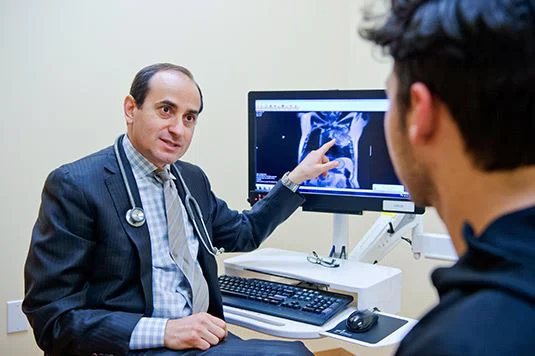
In medicine, particularly in the treatment of cancer, there’s no such thing as universal. No two people are the same. Their cancers aren’t the same. And the way they respond to therapies aren’t the same.
As medical director of the UCSF – Washington Cancer Center, I’m involved in the programmatic development of the cancer program, which includes a host of services that seek to support patients from diagnosis and beyond, including social work, nutrition, and, potentially, palliative care. One important aspect of this comprehensive cancer care model is our focus on precision medicine.
As health care moves away from a traditional one-size-fits-all model, precision medicine offers us the opportunity to create individualized treatment plans that take into account the person as a whole. By combining genetic analysis, medical history, lifestyle, and expectations, physicians can develop and recommend therapies that are not only effective but increase quality of life while treating the disease.

What precision medicine is (and isn’t)
Precision medicine isn’t just another marketing term, it’s a medical model that uses factors like lifestyle, environment, and individual genetic variability to choose the best therapies and prevention strategies. Contrary to popular belief, it’s not tailored to a specific individual, but, rather, to a subpopulation. What precision medicine is not, however, is a silver bullet. Neither simple nor absolute, it uses all available knowledge to predict the most effective, least detrimental treatment plan.
If it’s not a silver bullet, why use it?
Simply because of the possibility that it allows.
In the past decade, the cost of DNA sequencing has dropped significantly. What once cost tens of thousands of dollars can now be done for just a few hundred dollars. For institutions and academic medical colleges, it was that cost prohibitiveness that really stood in the way of significant genetic research. With that barrier lifted, we’re finding that just because we have the ability to sequence DNA and identify mutations doesn’t mean we always know what to do with that information.
Not yet, anyway.
So while, yes, precision medicine can inform personalized treatment, its biggest contribution, at present, is in amassing a library of mutations from which we can research, compare, and develop new treatments to target.


Care Rooted in Your Community
Built on 75 years of service and commitment
-
We Listen, Then ActWe assess community needs, then build new services to fill those gaps.
-
Putting Words Into ActionWe serve alongside neighbors through local boards, organizations, and civic groups.
-
Care from Your NeighborsOur staff is made up of your neighbors, reflecting the community we all serve.

From primary care to specialized treatment, we're here for you.