

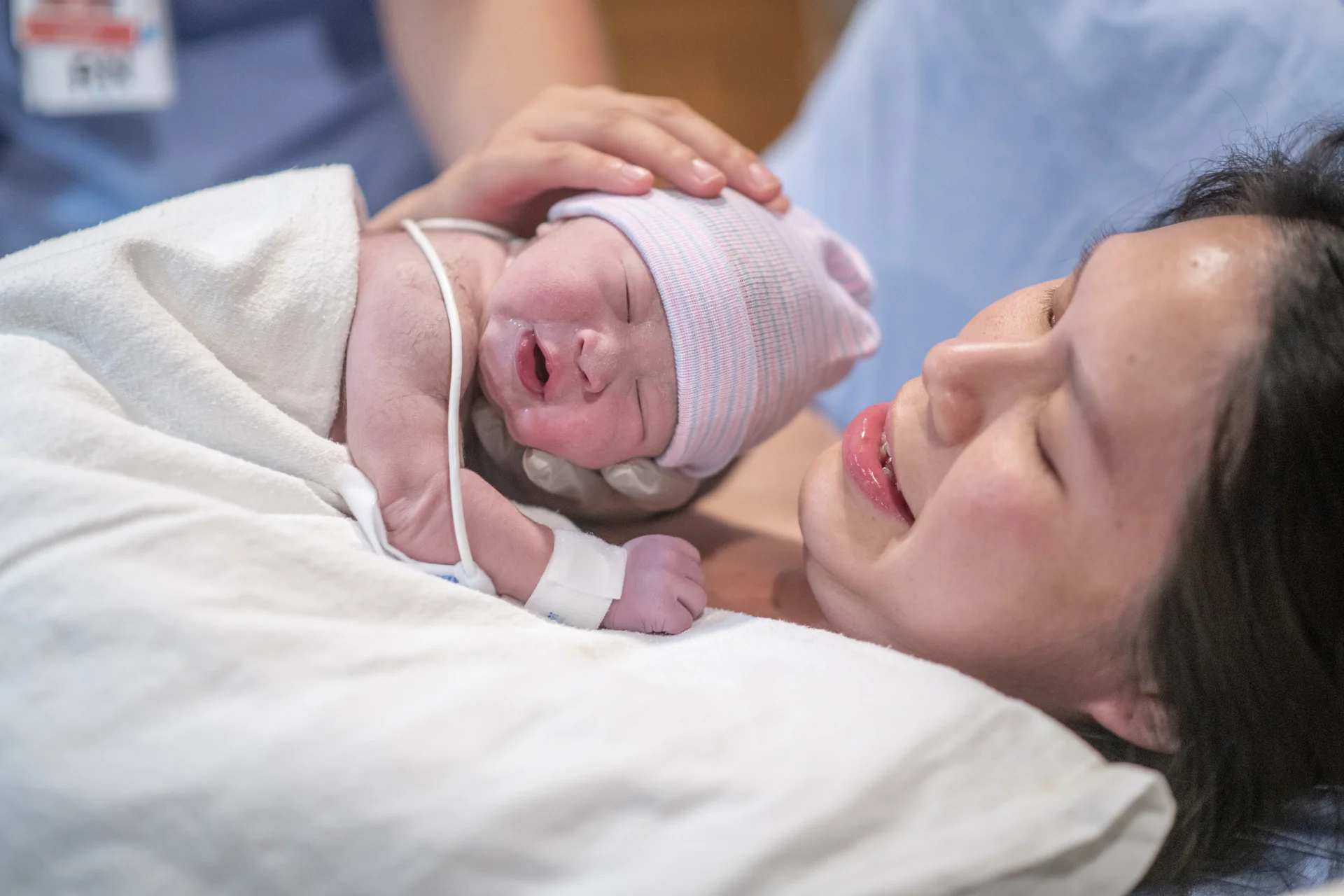
When a new baby arrives, parents often describe an overwhelming mix of joy, fear, love, and responsibility. As Washington Health obstetrician-gynecologist Alissa Erogbogbo, MD, FACOG, puts it, caring for a newborn can feel like suddenly being responsible for your own heart. “It’s like seeing my own heart in front of me. I need to honor that and protect my heart.”
That image captures what baby bonding is really about: recognizing a baby as precious and vulnerable, and building a relationship grounded in protection, love, and presence. Bonding isn't a single moment, but an ongoing process made up of simple, everyday interactions.
Promoting Baby Bonding
Washington Health's Maternal Child Health Department has been certified as Baby-Friendly by the Baby-Friendly Hospital Initiative, a global program sponsored by the World Health Organization and UNICEF. Dr. Erogbogbo said that means Washington Health follows evidence-based practices that promote mother-infant bonding including rooming-in and lactation support.
"Every family is different: single mom; mom and dad; mom and mom; dad and dad; or a grandparent and parent," she noted. "No matter what the structure, our goal is to make your first hours with your new baby the best they can be."
That begins with immediate skin-to-skin contact in the first hour after birth. Mothers and babies remain together in the same private room throughout their hospital stay, and lactation support starts immediately after delivery. Specialized breastfeeding support continues after discharge, with a nurse lactation consultant available to answer questions.
Premature or medically fragile newborns receive care in the family-centered Neonatal Intensive Care Unit (NICU), where staff work closely with parents to foster bonding.
Dr. Erogbogbo explained that while those first hours pass quickly, Washington Health provides ongoing support through maternal health classes, infant CPR instruction, and breastfeeding support groups. "Washington Health is here for women before their babies are born, during birth, and postpartum," she said. "We want you to start out in love and continue that way."
The Power of Touch
Touch is at the center of bonding. It's not about doing everything perfectly; it's about holding, comforting, and being present with your baby. Bonding doesn't have to be grand or complicated to be meaningful. Small rituals, like a special way of kissing, a bedtime song, or a favorite cuddle, help babies feel secure and loved. She also recommends simple infant massage techniques to soothe both babies and parents.
"Infant massage is almost an instant thing," Dr. Erogbogbo said. "They need that physical human connection, something that's going to stimulate them, but at the same time relax them."
This kind of closeness can happen during breastfeeding or bottle feeding, skin-to-skin snuggles, or even during bath time. "The point is the comfort of being held, warmed, and known," she said.
Bonding in the NICU and Beyond
For families with babies in the NICU, bonding can feel especially challenging, but it remains critically important. "Our NICU really promotes family bonding, even supporting it by being open around the clock," Dr. Erogbogbo said. "You may wake up at 4 a.m. and think, 'I want to go see my baby.'"
Parents and caregivers are encouraged to hold their baby skin-to-skin when possible, read stories aloud, and participate in feeding and care routines. "There are studies that show how well babies thrive with that skin-to-skin contact," she explained. "Even reading a book to the baby while they're receiving treatment is important. Having that story time makes a huge difference in how these neonates are going to thrive and how the parents will respond when it's time for the baby to go home."
Support, Not a Rulebook
One of the most reassuring messages Dr. Erogbogbo shares with new parents is that there is no instruction manual for parenting. "I could buy a car, and it would come with this huge manual. I would love to have one for my baby, but there's nothing," she said with a laugh. "You have to consider what is right for you and your family."
Every baby is different, and every bonding experience is unique. The most important thing, she said, is that parents and caregivers have the time, space, and support to get to know their child and build their relationship at their own pace. "No matter what your circumstances are, you deserve the time to be with your neonate or infant and enjoy that," Dr. Erogbogbo emphasized. "In the end, baby bonding isn't a test to pass; it's a relationship to grow through touch, voice, presence, and the everyday, imperfect, beautiful work of loving a new human being."
For more information about the Washington Health Birthing Center, visit washingtonhealth.com/birthingcenter. For more about Dr. Erogbogbo, see washingtonhealth.com/find-your-provider/alissa-rochelle-erogbogbo-md/.