


Active Trials
Breast Cancer
A Phase III Clinical Trial Evaluating De-Escalation of Breast Radiation for Conservative Treatment of Stage I, Hormone Sensitive, HER2-Negative, Oncotype Recurrence Score ≤ 18 Breast Cancer
Summary:
This study is for patients age 50-70, who have been diagnosed with early stage breast cancer who have had breast-conserving surgery also known as lumpectomy, with an Oncotype Recurrence Score equal to or less than 18 and is sensitive to hormones. The study compares the usual approach after lumpectomy to the use of hormonal drugs alone. This study will allow researchers to know whether treatment with hormonal drugs alone is better, the same or worse than the usual approach.
For more information: https://clinicaltrials.gov/ct2/show/NCT04852887
Cognitive Training for Cancer Related Cognitive Impairment in Breast Cancer Survivors: A Multi-Center Randomized Double-Blinded Controlled Trial
Summary:
This goal of this trial is to determine the efficacy of advanced cognitive training for cancer survivors suffering from cancer and cancer-treatment-related cognitive dysfunction.
For more information: https://clinicaltrials.gov/study/NCT05896189?term=NRG CC011&rank=1
Harnessing E-Mindfulness Approaches for Living-After Breast Cancer –HEAL-ABC
Summary:
NRG-CC015 is a prospective, randomized phase III clinical trial to evaluate the efficacy of two distinct digital approaches for delivering a mindfulness-based intervention: a live, instructor-led version delivered over Zoom (MAPs LO), and an app-based, self-paced version (MAPs App). Participants will include younger breast cancer survivors (BCS) who were diagnosed with breast cancer at or before age 50 years, have completed their primary cancer treatment (i.e., surgery, radiation, and/or chemotherapy) at least 6 months earlier, and report elevated depressive symptoms.
For more information: https://clinicaltrials.gov/study/NCT06748222
Elacestrant versus Standard Endocrine Therapy in Women and Men with Node Positive, Estrogen Receptor-Positive, HER2-Negative Early Breast Cancer with High Risk of Recurrence- A Global, Multicenter, Randomized, Open-Label Phase 3 Study (ELEGANT)
Summary:
The primary goal of this study is to evaluate the effectiveness of elacestrant versus standard endocrine therapy in participants with node-positive, Estrogen Receptor positive (ER+), Human Epidermal Growth Factor-2 negative (HER2-) early breast cancer with high risk of recurrence.
For more information: https://clinicaltrials.gov/study/NCT06492616
Colon Cancer
Colon Adjuvant Chemotherapy Based on Evaluation of Residual Disease (CIRCULATE US)
Summary:
This phase II/III study is for patients with stage III and high risk stage II colon cancer. The study will be seeking to determine whether chemotherapy is needed for all or only some patients in this population, and, if chemotherapy is needed, what kind of chemotherapy to recommend to patients based on the presence or absence of circulating tumor DNA (ctDNA) following surgery for colon cancer.
For more information: https://clinicaltrials.gov/study/NCT05174169
Lung Cancer
Randomized Phase III Study of Combination Osimertinib (AZD9291) and Bevacizumab versus Osimertinib (AZD9291) Alone as First-Line Treatment for Patients with Metastatic EGFR- Mutant Non-Small Cell Lung Cancer (NSCLC)
Summary:
A phase III study for patients who have been diagnosed with non-small lung cancer that has spread outside of the lungs and has a change in a gene called EGFR. The study compares the usual treatment approach of osimertinib alone to using bevacizumab plus osimertinib. This study will help researchers know whether this new approach of bevacizumab plus osimertinib is better, the same or worse than the usual approach.
For More Information: https://clinicaltrials.gov/ct2/show/NCT04181060
Prostate Cancer
The Phase III ‘High Five Trial’ Five Fraction Radiation for High-Risk Prostate Cancer
Summary:
This phase III trial compares stereotactic body radiation therapy (SBRT), (five treatments over two weeks using a higher dose per treatment) to usual radiation therapy (20 to 45 treatments over 4 to 9 weeks) for the treatment of high-risk prostate cancer. SBRT uses special equipment to position a patient and deliver radiation to tumors with high precision. This method may kill tumor cells with fewer doses over a shorter period of time. This trial is evaluating if shorter duration radiation prevents cancer from coming back as well as the usual radiation treatment.
For More Information: https://clinicaltrials.gov/study/NCT05946213
Our Locations
-
UCSF-Washington Health Cancer Center 39101 Civic Center Dr
Fremont, CA 94538 Map & Directions
Related Articles
-
 Cough Leads to Life-Changing ...
- Cancer
When 65-year-old Marge T. developed a wheezing cough, she assumed it was something minor like a ...
Read More -
 Colon Cancer: Preventable, ...
- Cancer
- Cancer Programs
Last month the American Cancer Society announced that colorectal cancer is now the leading cause of ...
Read More -
Colon Cancer: Preventable, ...
- Cancer
- Cancer Programs
Last month the American Cancer Society announced that colorectal cancer is now the leading cause of ...
Read More -
 UCSF–Washington Cancer Center ...
- Cancer
- Cancer Programs
Continuing a Commitment to Excellence, Healing, and Innovative Care, Close to Home FREMONT, CA – ...
Read More -
UCSF–Washington Cancer Center ...
- Cancer
- Cancer Programs
Continuing a Commitment to Excellence, Healing, and Innovative Care, Close to Home FREMONT, CA – ...
Read More -
.png.2601051701196.webp) Washington Health Earns National ...
Washington Health Earns National ...- Cancer
FREMONT, Calif., Dec. 18, 2025 – Washington Health recently received reaccreditation from the ...
Read More -
 Inspirational Breast Cancer ...
- Cancer
- Women's Center
Life was going well for Maria Dandan who had recently retired and moved from Hayward to a new ...
Read More -
 Health Care Heroes Lead Patient on ...
- Cancer
- Women's Center
Fremont resident Barbara Gorsuch felt a lump in her breast in January, but thought it couldn’t ...
Read More -
 How the New 3D Mammography Impacts ...
- Cancer
- Women's Center
An advancement in breast mammography makes it easier to diagnose cancer, minimize false positives, ...
Read More -
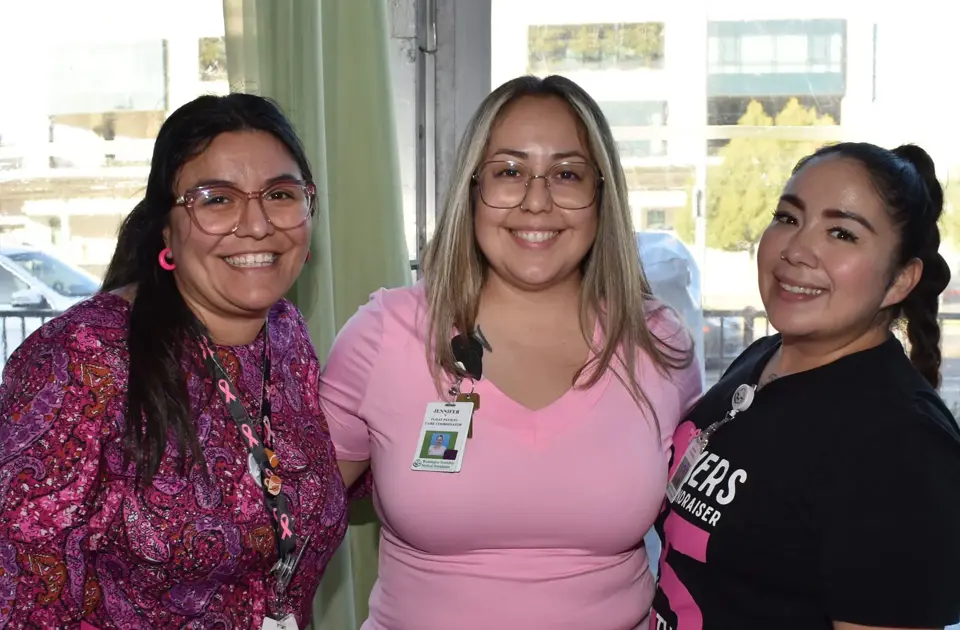 Washington Health’s Think Pink ...
- Cancer
- Women's Center
This is the 17 th year that Washington Health has sponsored its Think Pink community event to ...
Read More



.png.2601051701196.webp)





Care Rooted in Your Community
Built on 75 years of service and commitment
-
We Listen, Then ActWe assess community needs, then build new services to fill those gaps.
-
Putting Words Into ActionWe serve alongside neighbors through local boards, organizations, and civic groups.
-
Care from Your NeighborsOur staff is made up of your neighbors, reflecting the community we all serve.

From primary care to specialized treatment, we're here for you.