

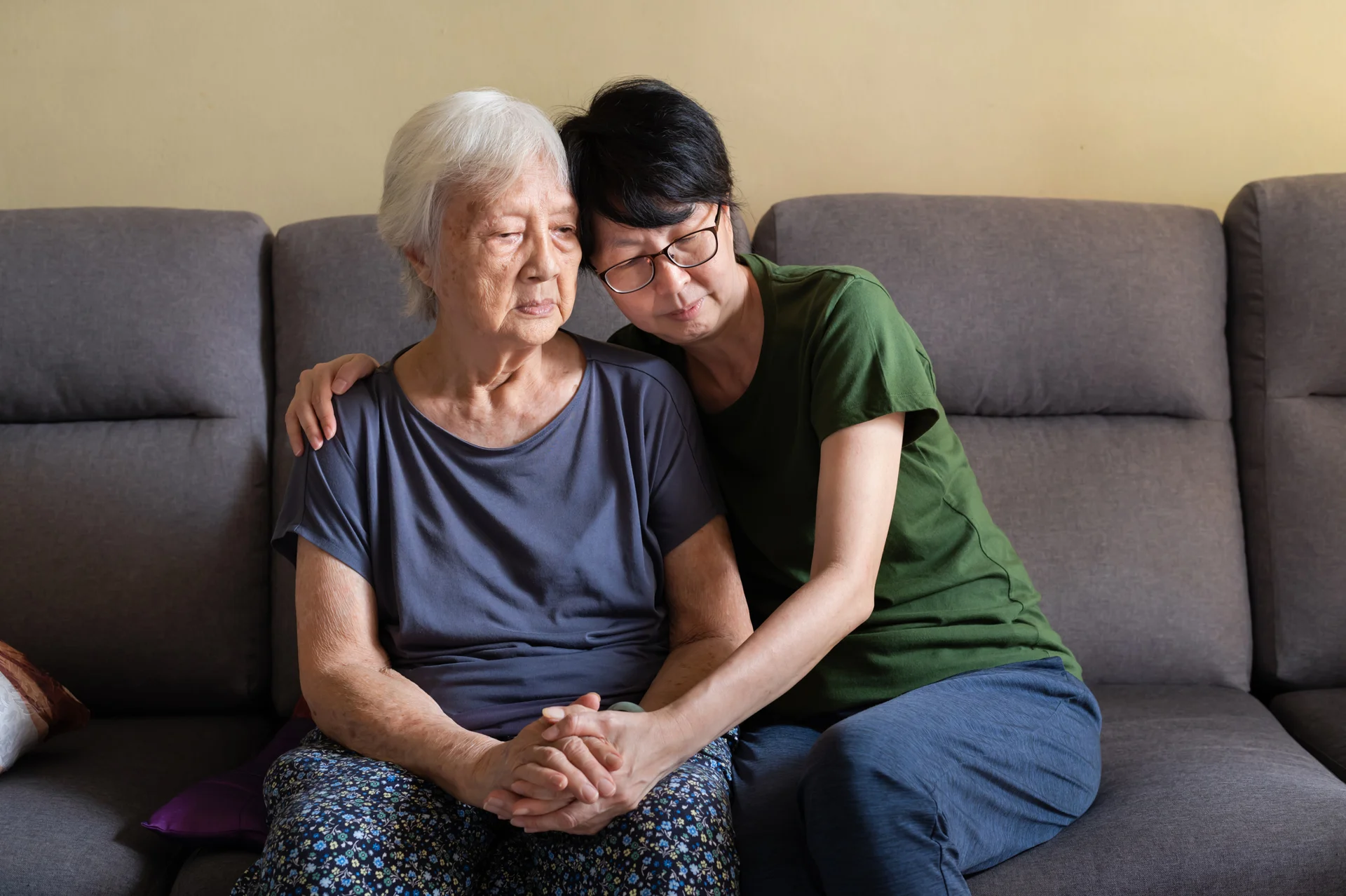
Have you ever felt guilty for not doing more for a sick loved one? Or are exhausted by a full-time job and caring for a special needs child?
You’re not alone. Approximately 50 to 60 million people are caregivers today, according to Seema Sehgal, MD, a psychiatrist with Washington Health. “Caregiving is the most massive unpaid industry in our country,” she explains.
To raise awareness for the job caregivers do, Dr. Sehgal will join hospital spiritual care coordinator JB Goodier in Washington Health’s latest podcast series, “Caring for the Caregiver: Physical, Mental, and Spiritual Health.“ Dr. Sehgal reminds us that caregivers are entitled to feel stress, guilt, exhaustion, or however they feel.
The new podcast series helps the community understand health and wellness topics of interest. It drops on the Washington Health YouTube channel Thursday, July 30, at 8 a.m. It will be easily accessible on a phone, laptop, or other mobile device. Following the initial presentation, it will be added to the YouTube library at YouTube.com/@washington_health.
Podcast Addresses How to Avoid Burnout
In the podcast, Dr. Sehgal and Goodier will give tips on how caregivers can practice self-care before experiencing burnout.
“Taking care of a sick or aging loved one may be incredibly rewarding, but it can also take a toll on your own physical, emotional, and spiritual well-being,” explains Dr. Sehgal. “This podcast focuses on the invisible struggles of caregivers and offers practical strategies for managing stress and burnout.”
Among the strategies that Dr. Sehgal recommends is practicing selfcare. She suggests asking for help when needed and understanding that it’s OK to feel a range of emotions, from grief to resentment.
“Caregivers feel the unique challenge of a sense of grief and loss that is intertwined with this work,” she says. “The impact of burnout is often missed by caregivers who are so busy working and caring for someone that they put their own needs on hold.
“I look at caregiving as one of the most unnoticed parts of our health care system. Caregivers are the invisible patients in our system who do the heavy lifting of keeping our patients well after they receive care here. It’s one of the most important pieces of a system.”
She explains that caregiving is often thought of as caring for an elderly person or someone with dementia. But caregiving includes caring for a child with special needs, for example, or a spouse with multiple sclerosis. “There are so many different types of caregiving that affect a wide spectrum of people.”
Strategies for Seeking Help
People often wonder why caregiving takes so much out of a person. According to Dr. Sehgal, “To be a good caregiver you have to have a heart. That means you have emotions and you’ll experience emotional ups and downs.”
She adds: “Here’s the job description for a caregiver: You’ll be anxious and depressed, and have sleep disruptions, feel burnout and have guilt. It’s a big burden.”
“You can’t pour from an empty cup, so keep your cup full. Caregiving is the highest grace and honor, so fill your cup. Everything stands to improve for you and your loved one when you are cared for, too.”
“Caring for the Caregiver: Physical, Mental, and Spiritual Health“ is the second in the new podcast format. Washington Health is pivoting to this new method of health-related education to provide information in a more entertaining, accessible way. Community members are encouraged to tune in July 30, at 8 a.m.