

Most people don’t think about a trauma center until the moment they desperately need one. But at Washington Health, the trauma team is working every day to help ensure that moment never comes.
“The philosophy behind Washington Health’s injury prevention program can be summed up simply,” said Trauma Program Director Jennifer Kubisz, BSN, RN. “We’re here for you, but we’d really rather not see you in our trauma bay.”
That philosophy is now an essential part of trauma care. Trauma Injury Prevention Coordinator Garrett Cordes explained that the American College of Surgeons (ACS) requires verified trauma centers to maintain formal injury prevention programs. The goal is simple: trauma centers shouldn’t just treat injuries but should help prevent them.
Data-Driven Prevention
Trauma centers have a unique window into how serious injuries happen. Kubisz explained that every trauma case is carefully tracked and analyzed, allowing Washington Health to identify patterns and focus prevention efforts where they can have the greatest impact.
Using this data, the hospital has identified its three leading causes of trauma activation as:
- Falls, particularly among older adults.
- Motor vehicle collisions.
- “Micromobility” incidents involving bicycles, e-bikes, scooters, e-skateboards and e-scooters.
The trauma team also addresses child passenger safety, violence prevention, fireworks safety, water safety and other community risks.
Falls: Reducing Injuries and Fear
Falls account for roughly 62% of Washington Health’s trauma activations, making them the leading cause of serious injury treated by the trauma team.
“Once you’ve fallen, even if you didn’t break a hip, you know you could have,” Cordes explained. “Many older adults respond by limiting their activities and staying home. Unfortunately, that isolation leads to less movement, weaker muscles, and poorer balance, actually increasing the risk of falling again. For adults over 65, a prior fall essentially doubles the risk of a future one.”
To help break that cycle, Washington Health offers several evidence-based, fall prevention programs.
The one-hour “Six Steps to Prevent a Fall” presentation teaches participants practical strategies such as reviewing medications, improving home safety, staying physically active, and obtaining regular hearing and vision checks.
For those seeking more in-depth support, the eight-week “Matter of Balance” program focuses on reducing fall risk through home safety assessments, medication reviews, and simple exercises that improve strength, balance, and endurance.
The hospital also offers “Bingocize,” a 10-week program that combines bingo-style games, health education, and gentle exercise in a group setting.
“These nationally recognized, research-backed programs have been shown to reduce fall rates and increase confidence in older adults,” Cordes said. “Equally important, they combat isolation. Participants often begin going to lunch together after class and staying in touch over the long term, strengthening social connections that are vital to overall health and well-being.”
Teaching Lifesaving Skills
Washington Health also brings emergency preparedness directly into the community through its Stop the Bleed program.
Participants learn how to recognize life-threatening bleeding and respond using direct pressure, wound packing, and tourniquet application — critical skills that can save a life before emergency responders arrive.
The classes are offered at high schools, colleges, community organizations, and career-training programs, often alongside instruction on recognizing emergencies, calling 911, and responding to choking incidents.
“Injuries that cause serious bleeds can happen anywhere,” Cordes noted. “The important thing is to try to stop the bleeding immediately anyway you can, whether it’s putting pressure on a cut or stuffing a clean cloth into a deep wound. These actions can save lives while you are calling 911.”
Safer Roads for Every Generation
Motor vehicle collisions remain another leading source of serious injuries. To address this, Washington Health offers TREDS, a driver-safety program developed by the University of California, San Diego. The program includes modules on distracted driving, pedestrian safety, and safe driving strategies for older adults.
For younger drivers, the trauma team partners with the California Highway Patrol on the Start Smart program. Often assigned to teens who have received traffic citations, the two-hour class uses real stories, crash footage, and candid discussions to help participants understand the consequences of risky driving behaviors.
Trauma staff and CHP officers work together to create a powerful learning experience that emphasizes responsibility without shaming participants.
Helmets for a Faster World
The rapid growth of e-bikes and e-scooters has created a new injury trend for trauma centers nationwide.
Kubisz noted that many of these devices can travel between 20 and 28 miles per hour, increasing the likelihood of serious head and facial injuries during crashes.
“For traditional bicycles, helmet recommendations are well established, but for high-speed e-bikes and scooters, guidelines are evolving,” Cordes shared. “Based on trauma data and national experience, Washington Health now recommends full-face helmets, similar to those used in motorsports, for riders at these higher speeds.”
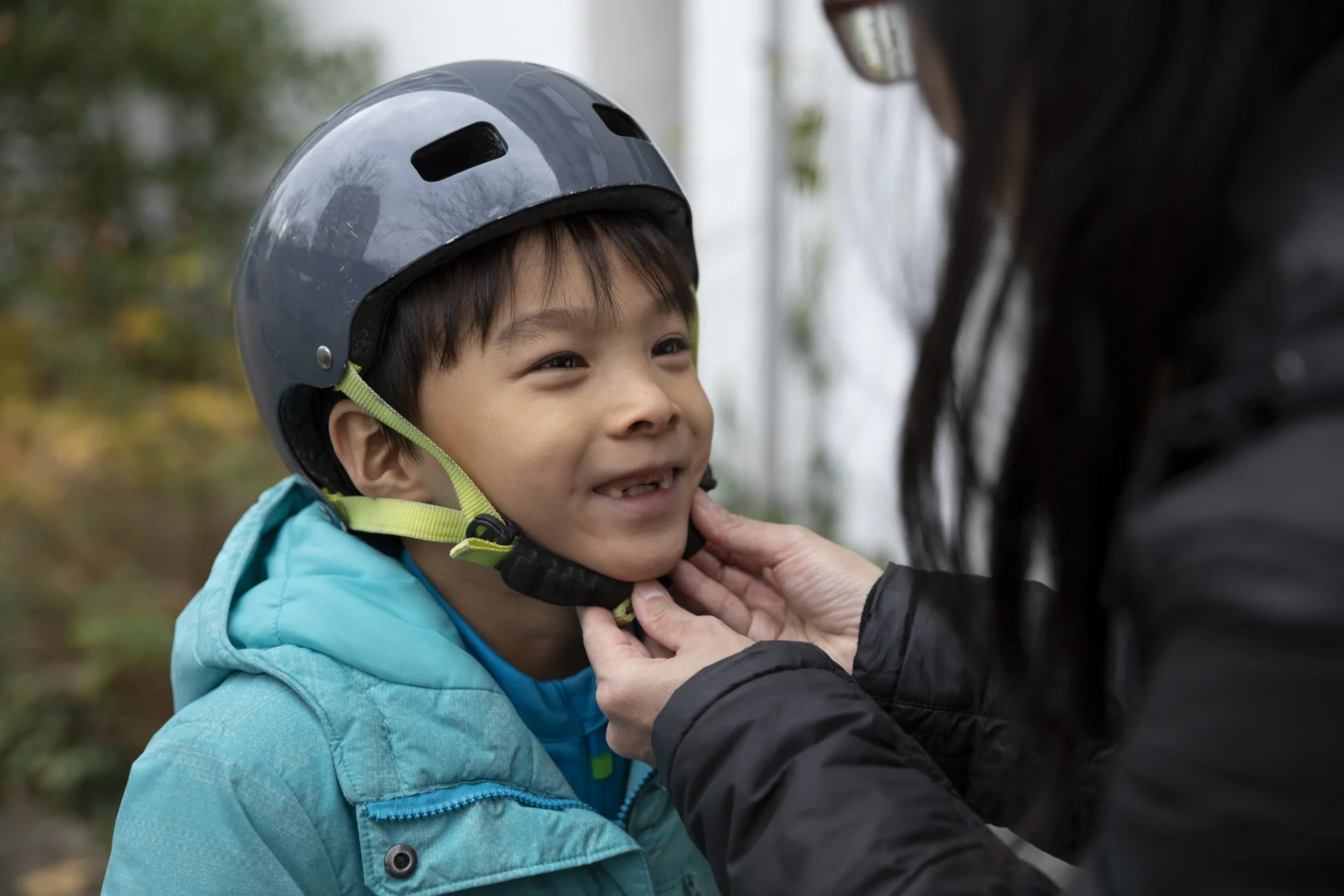
The trauma team promotes bike safety at community events, including Bike to Anywhere Day, where they teach proper helmet fit and safe riding practices.
“We are very proud of our latest project, a bike safety coloring book, developed in partnership with the Fremont Rotary,” Kubisz said. “Children receive the coloring book along with crayons and a sheet of stickers to decorate their helmets. The idea is to promote pride of ownership with the stickers. When kids personalize their helmets, they may be more likely to wear them consistently and proudly.”
Protecting Children on the Road
Trauma prevention extends beyond riders and drivers to the youngest passengers. Cordes recently became a certified child passenger safety technician, enabling him to inspect and properly install child safety seats according to manufacturer guidelines.
“Many families are surprised to learn that car seats expire,” Cordes said. “Any car seat involved in any collision, even a low-speed one, needs to be replaced. And secondhand or online bargain seats may not meet safety standards or may be subject to recalls.”
Washington Health regularly partners with Alameda County EMS, Safe Kids, and CHP to host car seat inspection events where families can receive guidance on installation, fit, and replacement options.
A Communitywide Commitment
The trauma team also partners with organizations such as Youth Alive to support violence prevention efforts and shares seasonal safety information on topics ranging from fireworks to water safety.
WH Trauma Performance Improvement Coordinator Ginger Miramontes, MSN, RN, CNL, CCRN, said what sets Washington Health’s program apart is how deeply it is woven into the Tri-City community.
“From senior centers and schools to scouting groups and preschools, the trauma team tailors its education to each audience with the singular goal of preventing injuries before they happen,” Miramontes said. “As these programs continue to grow, Washington Health encourages community organizations to host classes and connect residents with injury prevention resources.”
For information on Washington Health’s Trauma Center, visit WashingtonHealth.com/Trauma. For information about injury prevention classes, contact Garrett Cordes at garrett_cordes@washingtonhealth.com.