

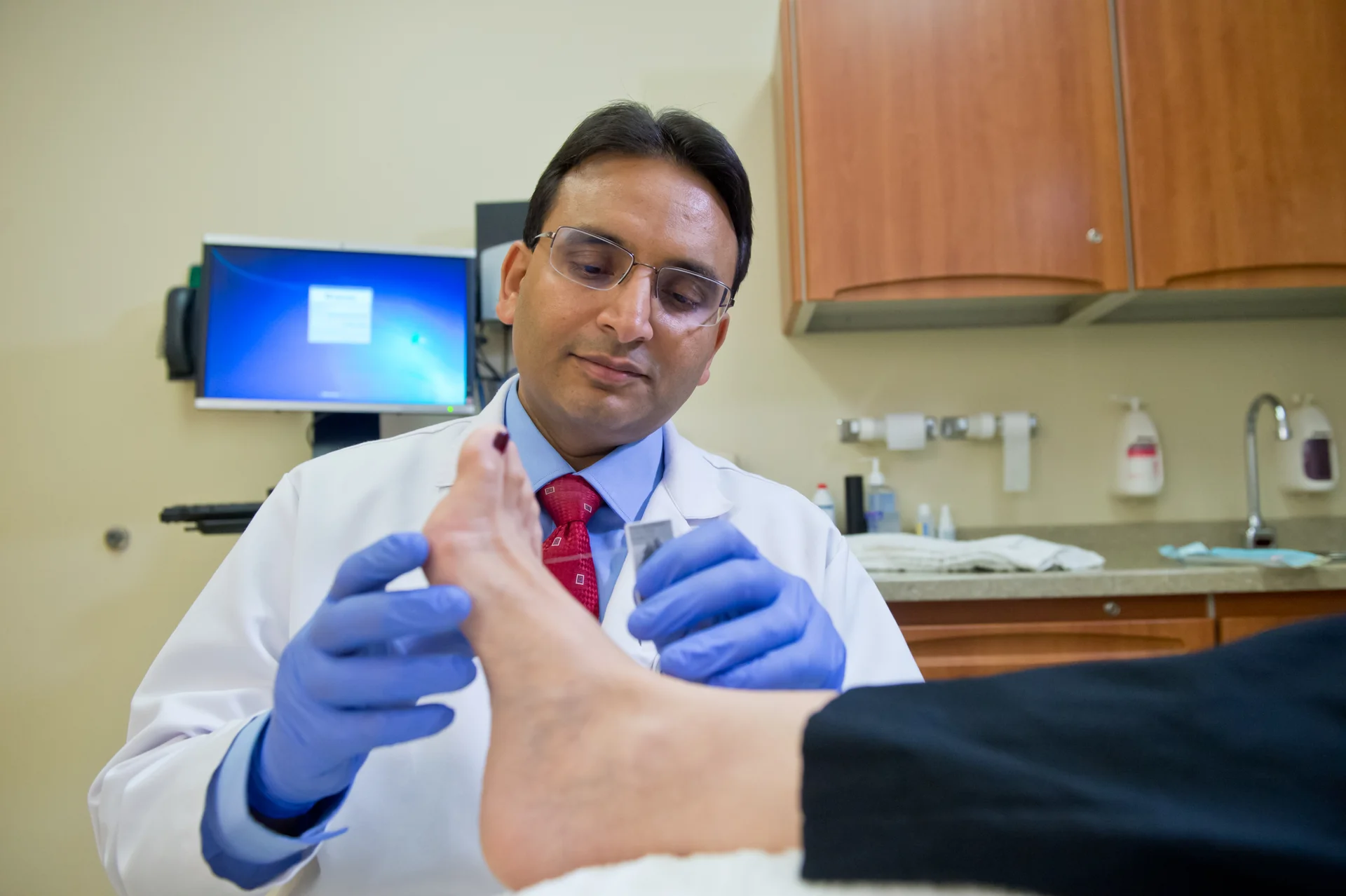
A small cut or blister may seem harmless, but for people living with diabetes, recognizing the warning signs can help prevent serious complications.
A blister from a new pair of shoes. A small cut on the bottom of a foot. A scrape that doesn't seem to heal as quickly as expected.
For most people, these minor injuries heal without complications. But for someone living with diabetes, even a small break in the skin can become a more serious problem.
When skin is injured, blood carries oxygen and nutrients to damaged tissue, while the immune system fights bacteria. New tissue forms to close the wound.
Diabetes can interfere with several steps in that process. When blood sugar remains elevated over time, the body's ability to fight infection may weaken, circulation can become impaired and damaged tissue may take longer to repair. What might otherwise heal relatively quickly can become a persistent wound, increasing the risk of infection and other complications.
A 2025 Community Health Needs Assessment prepared collaboratively by Washington Health and other Bay Area health systems found diabetes prevalence nearly doubled across Fremont, Newark and Union City over a decade.
Between 2011-2012 and 2021-2022, diabetes prevalence increased from 7% to 13.4% in Fremont, 8.2% to 14.8% in Newark and 8.2% to 15.6% in Union City.
Why a small wound can become a big problem
Over time, elevated blood sugar can damage nerves, particularly in the feet. This condition, known as peripheral neuropathy, can reduce the ability to feel pain, pressure or temperature changes.
Someone with neuropathy might develop a blister from an ill-fitting shoe but continue walking without noticing the discomfort. Repeated friction can cause the blister to break open, creating a wound that may go undetected for days.
Meanwhile, damage to blood vessels can restrict the flow of oxygen-rich blood needed for healing. Elevated blood sugar can also interfere with the body's infection-fighting defenses, allowing bacteria entering the wound to cause more serious problems.
If left untreated, a wound may deepen into a diabetic foot ulcer, an open sore that can extend into underlying tissue. Severe infections can sometimes threaten the surrounding tissue or even lead to amputation.
Prasad Kilaru, MD, a board-certified plastic surgeon with Washington Health Medical Group and director of the Washington Center for Wound Healing & Hyperbaric Medicine, emphasizes the importance of early intervention.
“These problems need to be identified and treated as soon as possible,” Kilaru said.
A few minutes of prevention
The Centers for Disease Control and Prevention recommends checking both feet every day, including the soles and between the toes. Look for cuts, blisters, redness, swelling, cracked skin, calluses or changes in skin color.
People who have difficulty seeing the bottoms of their feet can use a handheld mirror or ask a family member for assistance.
Other preventive steps include washing feet in warm, not hot, water; drying carefully between the toes; wearing properly fitting shoes and socks; and avoiding walking barefoot, even indoors.
Moisturizing dry skin can help prevent cracking, but lotion should not be applied between the toes, where excess moisture can encourage infection.
Regular medical foot examinations are also important. A healthcare provider can identify changes in circulation or sensation before noticeable problems develop.
Know when to seek medical attention
A wound doesn't have to be painful to be serious. For someone with diabetic nerve damage, the absence of pain may actually make an injury easier to overlook.
People with diabetes should contact their healthcare provider promptly if they discover a new foot wound, blister or sore, even if it seems minor.
A wound that isn't improving, or one accompanied by increasing redness, swelling, warmth or drainage, needs medical evaluation. Fever, rapidly spreading redness or other signs of a serious infection require urgent attention.
When specialized wound care is needed
Specialized wound care focuses on identifying and treating the underlying causes of a wound, not simply covering or dressing the affected area.
Treatment may include evaluating circulation, managing infection, removing damaged tissue and reducing pressure on the injured foot so healthy tissue can recover. For certain severe diabetic foot wounds that have not responded to standard treatment, hyperbaric oxygen therapy may also be considered.
The Washington Center for Wound Healing & Hyperbaric Medicine in Fremont provides these specialized services, working with patients and their physicians to develop individualized treatment plans.
While diabetes can make wound healing more complicated, serious complications are not inevitable. Managing blood sugar, examining feet daily and seeking timely medical attention can help protect long-term foot health.
That small blister or cut may seem insignificant, but recognizing it early can make all the difference.
To learn more about diabetes care and management at Washington Health, visit washingtonhealth.com/diabetes.