

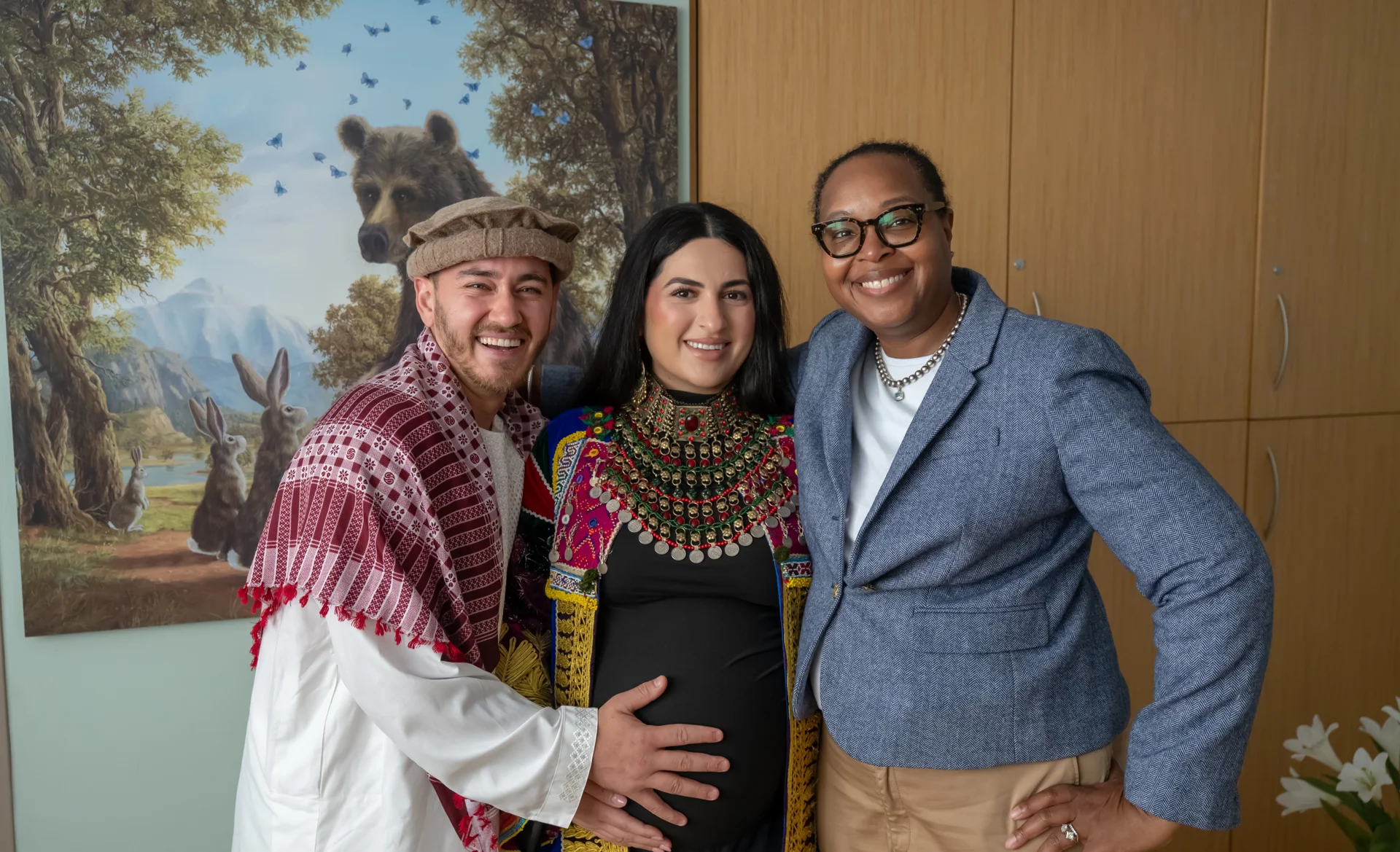
When you're getting ready to welcome a new baby, you're thinking about more than contractions and delivery rooms. You want to know whether the people caring for you will listen, respect your wishes, answer your questions, and help you feel at ease during one of life's biggest moments.
At Washington Health, that's the philosophy behind the Maternal Child Health Department. The Baby-Friendly unit combines advanced maternity care with a personal approach that recognizes every family's story is unique. From physicians and nurses who work together as one team to thoughtful touches that honor cultural traditions and feeding choices, the goal is simply to help every family feel safe, supported, and truly seen.
Care Built Around Every Family
Washington Health emphasizes cultural humility, the idea that every family has unique traditions, values, and needs. Nneka Chukwu, DNP-HCL, MSN, MBA, RN, CLNC, NEA-BC, director of Washington Health’s Maternal Child Health Department, said that rather than making assumptions, caregivers begin by asking thoughtful questions.
"Historically, you hear things like, 'Well, I treat my patients the same.' We don't do that," Chukwu explained. "Our patients' needs are very unique."
That may include conversations about faith traditions, language preferences, family involvement, or feeding choices, shared Washington Health’s Chief of Women’s Services Alissa Erogbogbo, MD.
"Sometimes those questions can feel awkward," Dr. Erogbogbo said. "But it's better to ask than to assume. Those conversations help us understand what's important to each family, so we can care for them the way they want to be cared for."
A Team That Works Together
The Maternal Child Health Department functions like a small hospital within the larger medical center. Labor and delivery, OB triage, and cesarean operating rooms are all located together, allowing physicians and nurses to work closely throughout a patient's stay. That collaboration often means families don't have to repeat their story to each new caregiver.
"Sometimes the patient feels more comfortable saying something to the nurse," Chukwu said. "The nurse can then relay that information to the doctors and other providers. Having that collaboration is really important."
Dr. Erogbogbo agrees, "I rely on the nurses to tell me if there's anything I should know before I walk into the room. It helps everyone understand where the patient is coming from."
Listening Beyond the Hospital
Washington Health also seeks input from families long before delivery through community outreach and an advisory council that helps shape maternal and infant care services.
"The Maternal Child Health Advisory Council is another way of saying to the community, 'Your voice matters,'" Chukwu said. "Come sit at the table with us and let's talk about how we can make your experience better."
Those conversations have influenced how the team approaches breastfeeding education. While Washington Health is a Baby-Friendly hospital that strongly supports breastfeeding and skin-to-skin bonding, staff recognize that every family's experience is different.
One discussion with community members about lower breastfeeding rates among Black women highlighted the historical trauma of enslaved Black women being forced to nurse their enslavers' children.
"It was such an aha moment," Chukwu noted. "It helped us rethink how we approach breastfeeding with this population."
Instead of pressure, families receive education, support, and the freedom to make the choice that's right for them.
"We make sure you have the resources and education you need," Dr. Erogbogbo pointed out. "But you reserve the right to make the decision. Whatever you choose, we're here to support that, without shame, pressure or judgment."
Small Touches That Feel Like Home
Sometimes the details matter most. Reflecting the diversity of the community it serves, Washington Health created a pantry where families can refrigerate and heat traditional meals brought from home.
"We may not be able to serve everything you want in our cafeteria," Chukwu said, "but we can create a pantry that's available 24 hours a day."
For a new mother craving homemade soup in the middle of the night, or a family wanting familiar comfort food after delivery, it's a simple way of saying that their traditions are welcome.
More Than a Birth Experience
Whether it's collaborative care, thoughtful conversations, or a warm meal from home, Washington Health's Maternal Child Health team is focused on making every family feel respected and supported during one of life's biggest moments.
Because every birth tells a different story, and every family deserves the opportunity to begin theirs feeling heard, respected, and supported. The team believes great maternity care means more than safely delivering a baby. It means listening first, respecting individual choices, and helping families begin their next chapter feeling confident, supported, and at home.
To learn more about Washington Health’s Maternal Child Health team, listen to this podcast with Chukwu and Dr. Erogbogbo at youtube.com/@washington_health.