

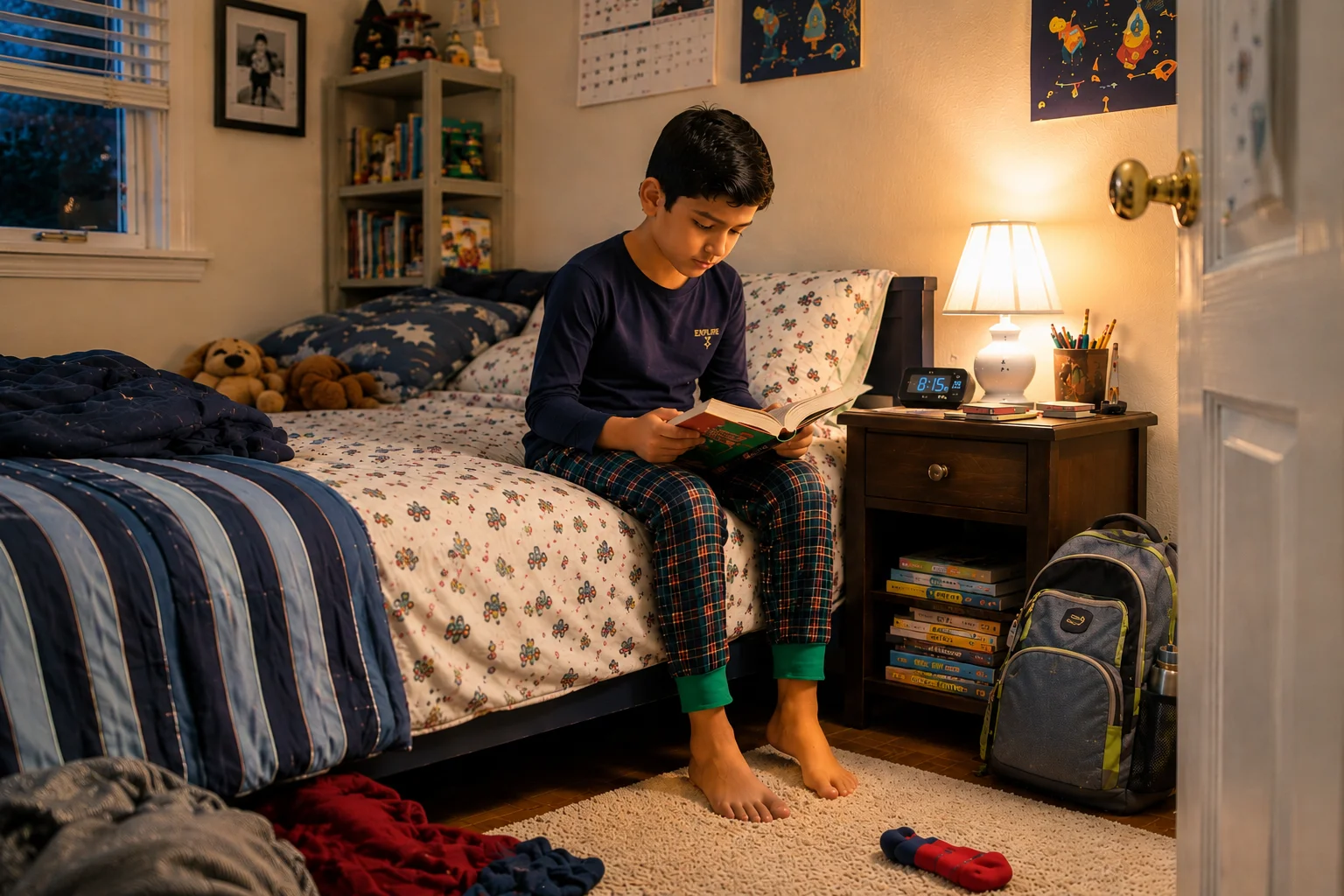
As Tri-City families prepare for another school year, there are backpacks to buy, school supplies to organize and schedules to coordinate. But one of the most important preparations is getting children back to healthy sleep schedules. Adequate sleep is foundational to a child's health and well-being, from the classroom, to the playground to, home life.
“Sleep affects everything children do,” said Rishika Singh, MD, FAAP, an integrative pediatrician at Washington Health. Dr. Singh recently completed fellowship training in integrative medicine, an approach that considers the whole child and incorporates evidence-based lifestyle strategies alongside conventional medical care. “There are four pillars to health: nutrition, sleep, physical activity, and mental health. So, if you support all four, your children will thrive. If one of these- like getting enough sleep is lacking, it can negatively affect how a child functions,” she said.
Healthy Sleep, Healthy Child
A well-rested child is better able to pay attention in class, process new information, manage the demands of a busy school day and learn efficiently. Adequate sleep has a direct connection to academic performance.
Sleep is also critical to a child's mental and emotional well-being. Adequate sleep can help children regulate their reactions, and cope with the frustrations and challenges of growing up. When children are overtired, they may be more irritable, impulsive or easily overwhelmed, which can make communicating and navigating friendships more difficult.
Adequate sleep is also essential to a child's physical health. During sleep, the body performs important functions such as tissue repair, muscle growth, and the release of hormones that support normal growth and development. Research has associated chronic sleep deficiency in children with an increased risk of obesity and metabolic problems, including type 2 diabetes. Dr. Singh also points out that sleep helps regulate children's immune systems, reducing their susceptibility to colds and flu, and bolstering their ability to fight infections.
The amount of sleep children need changes as they grow. Dr. Singh points to recommendations endorsed by the American Academy of Pediatrics: children ages 3 to 5 should sleep 10 to 13 hours, including naps; those 6 to 12 should sleep 9 to 12 hours; and teenagers ages 13 to 18 should sleep 8 to 10 hours per 24 hours. These targets can be difficult to achieve after later summer bedtimes, sleeping in, vacations and less structured routines. That’s why Dr. Singh recommends beginning the transition before the first day of school.
Tips for Successful Sleep Routines
Integrative pediatricians consider a child's sleep, nutrition, activity, emotional health, environment and daily routines as interconnected factors. Dr. Singh offers parents these practical tips for establishing healthy sleep habits:
- Start early. If possible, begin adjusting bedtime and wake-up time a week before school starts. Moving bedtime earlier in small increments can make it easier for a child's body to adapt.
- Keep the schedule consistent. Maintain relatively consistent bedtimes and wake times, including weekends. Consistency reinforces the body's sleep-wake cycle and circadian rhythm.
- Create a predictable wind-down routine. Give children time to transition from the day to sleep. Reading, taking a bath or shower, listening to quiet music or having a calm conversation can signal that bedtime is approaching.
- Turn off screens. Phones, tablets, TV and gaming can make it harder for children to wind down. A screen-free period (at least one hour) before bedtime can make the transition to sleep easier.
- Get kids moving during the day. Physical activity supports healthy sleep. Encourage children to spend time outdoors and be active during the day, while avoiding stimulating activities before bedtime.
- Use morning light to reset the clock. Once children get up earlier, exposure to natural morning light can help reinforce an earlier wake time.
- Protect sleep as a health priority. With the competing demands of school, homework, sports, screen time and family responsibilities, bedtimes often get pushed later.
Dr. Singh encourages parents to think about sleep differently. “Protect your children’s sleep like it’s your job,” she emphasized. Families will have late practices, vacations and unexpected disruptions. The goal is to make adequate, consistent sleep a priority rather than something children get only after everything else is done.
For more information about Washington Health’s Pediatric Services and Dr. Singh, go to washingtonhealth.com/services/pediatrics