

National Women’s Health Month is observed every May. Every year, it serves as a reminder that women’s health deserves attention, investment and prioritization. Yet in practice, many women, especially mothers, continue to put themselves last, focusing on the needs of children, partners, aging parents and careers before their own well-being. The pattern is not just common, it’s deeply ingrained.
“Women spend so much time focusing on everyone else’s needs,” noted Washington Health women’s health nurse practitioner Kate Donaldson-Fletcher, WHNP, RN, CNM. “But we don’t take care of ourselves. We cannot take care of other people if we don’t first take care of ourselves.”
Prevention is the nonnegotiable foundation
Simplicity is at the core of Donaldson-Fletcher’s philosophy. She calls preventive care the “biggest bang for your buck.” Annual check-ups, screenings and routine lab work are not optional; they are essential.
This includes maintaining cardiovascular health, monitoring cholesterol and blood sugar, and staying current with screenings like Pap smears and mammograms. Regular visits with a primary care provider or OB-GYN also ensure recommended vaccinations are received and potential health issues are detected early.
“Preventive care is the foundation of the pyramid,” she emphasized. “Unless we clear that hurdle, we can’t attend to our higher needs. Without a healthy physical baseline, it’s hard to build a fulfilling, energized life.”
Building a health span
Modern medicine has helped extend lifespan, but Donaldson-Fletcher wants women to think beyond simply living longer. The real goal is “health span,” the number of years lived in good physical, mental and emotional health.
To achieve that, physical activity is critical, especially as women age. After 40, natural declines in bone density and muscle mass accelerate, increasing the risk of fractures, frailty and chronic disease. Donaldson-Fletcher advocates for sustainable, enjoyable movement. “It has to be something you love,” she says. “Otherwise, it won’t stick.”
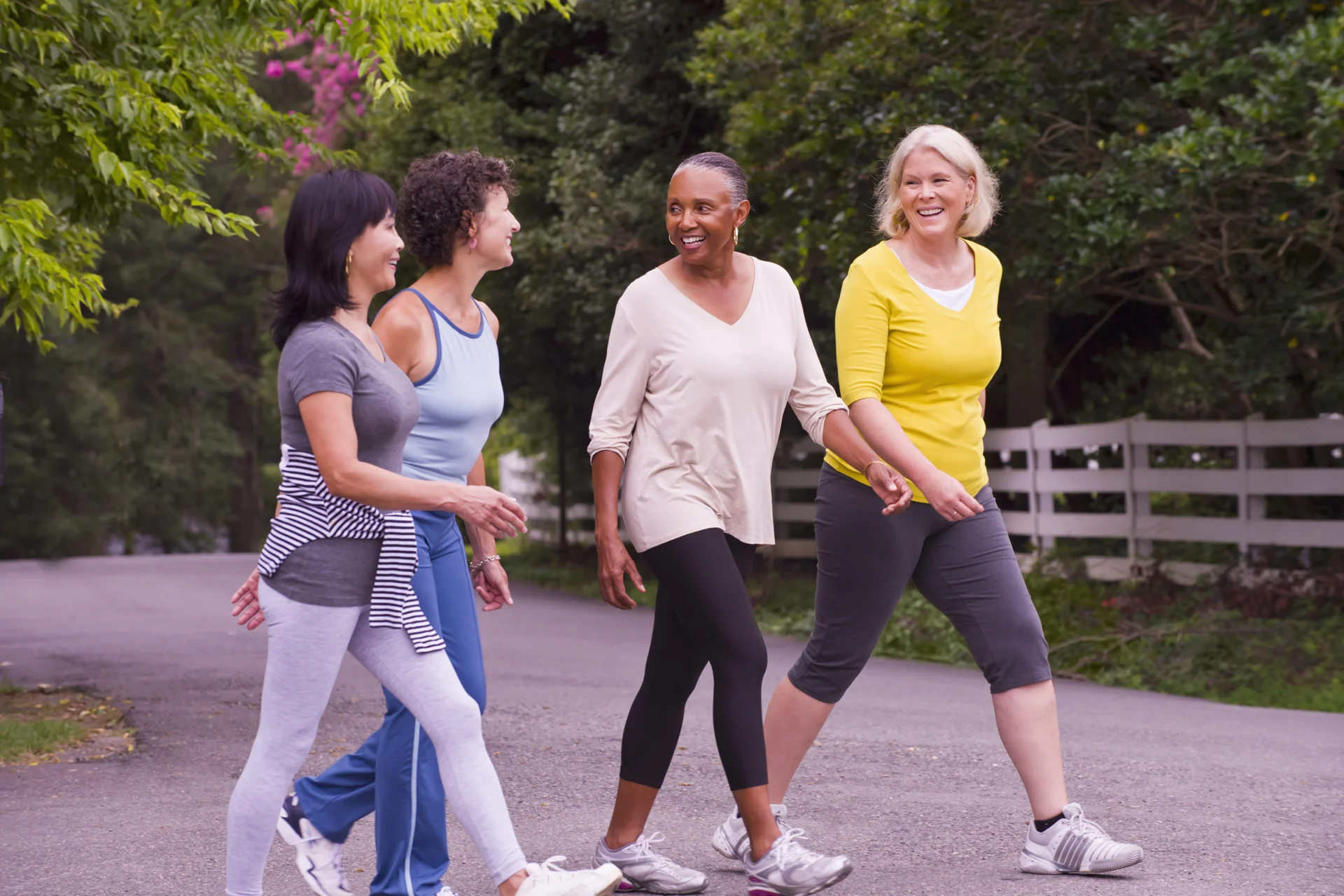
That might mean hiking scenic trails, joining a rowing group, walking briskly with friends, or simply choosing routes with hills and stairs to elevate heart rate. The key is intensity, movement that gets the blood flowing and creates a light sweat. Physical activity should serve multiple purposes. A walk with friends or family, for example, combines exercise with social connection, creating a more holistic and rewarding experience.
The power of connection and joy
While preventative care is the foundation and physical health completes the next level, emotional and mental well-being are the vital top of the pyramid. Donaldson-Fletcher highlights the importance of nurturing relationships that feed your soul. “Who gives you joy? Who makes you feel good?” she asked. “We have to lean into those social connections and keep them alive.”
These relationships are not just pleasant additions to life, but are critical drivers of brain health, optimism and resilience. In a world that often feels overwhelming, meaningful human connection acts as a buffer against stress, anxiety, and burnout. Donaldson-Fletcher recommends reframing social time as a health investment and not an indulgence.
Mental health is an essential part of the equation
Even when physical check-ups come back normal, women may still struggle with anxiety, depression or emotional fatigue. Donaldson-Fletcher stresses that mental health deserves the same attention and openness as physical health.
“If you’re feeling depressed or anxious, we want you to talk about that,” she says. “Your PCP, your OB-GYN, your nurse practitioner — we all want you to thrive.”
Addressing mental health is not a sign of weakness. Donaldson-Fletcher said it is a critical step toward overall wellness. In fact, untreated mental health challenges can make it significantly harder to maintain healthy habits, from exercise to nutrition to social engagement. Breaking the silence around mental health and seeking support when needed is a key component of sustainable well-being.
Rediscovering purpose
Once preventive care is in place and health risks are managed, women must consider what gives their lives meaning. Donaldson-Fletcher explained that purpose can take many forms, whether career, family, community involvement, creative pursuits or personal growth. “What is your sense of purpose to move you forward?” she asks. “Why are you getting up every day? What are you living for?”
A strong sense of purpose has been linked to improved mental health, greater resilience, and even longer life expectancy. It provides direction, motivation and a reason to invest in one’s own well-being.
Mind, body and spirit
Ultimately, Donaldson-Fletcher’s approach to women’s health is holistic. It integrates three interconnected pillars:
- Healthy body through preventive care and physical activity
- Healthy mind through emotional awareness and mental health support
- Healthy spirit through connection, joy, and purpose
“If your body isn’t working well, nothing is going to work well,” Donaldson-Fletcher said. “But physical health alone isn’t enough. True well-being comes from aligning all three dimensions.
“Schedule preventive care,” she continued. “Dedicate time for mental wellness. Stay active, get enough sleep and eat well. And, most importantly, educate yourself about your total health. Know your numbers, know your family history. Make yourself your top priority.”
Permission to Prioritize Yourself
Despite the simplicity of these principles, many women struggle to implement them. Donaldson-Fletcher said the barrier isn’t knowledge, it’s permission. “It sounds so simple,” she shared. “But for whatever reason, it feels challenging for women to tell themselves it’s okay to take that time.
“Reframing self-care as essential, not selfish is the first step,” she continued. “Taking a walk, scheduling a check-up, or spending time with supportive friends is not time taken away from others; it is an investment that enables women to show up fully in every role they play.”
For more information about Donaldson-Fletcher, visit www.washingtonhealth.com/find-your-physician/katherine-donaldson-fletcher-rn-whnp-cnm/. For information on Washington Health’s Women Health Center, see www.washingtonhealth.com/services/womend-health/.